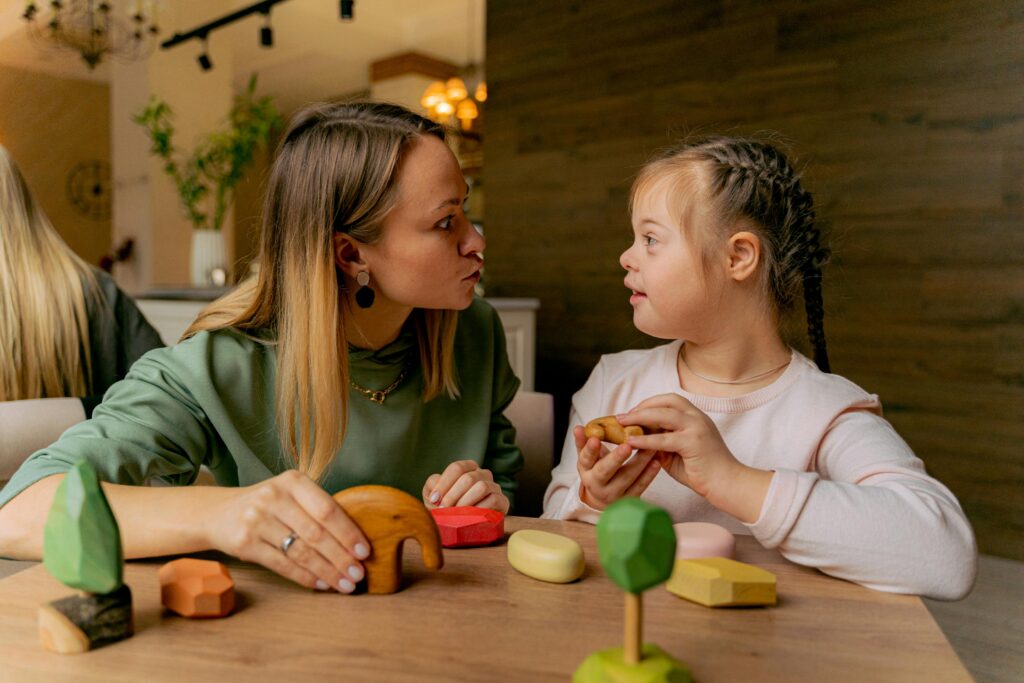
Therapy for children with learning disabilities. Supporting communication through AAC, visuals, and total communication in Glasgow.
Understanding Learning Disabilities
Learning disabilities (also referred to as intellectual disabilities) affect how a child understands information and how they develop new skills — including communication, social interaction, and learning. These differences are lifelong and vary widely from person to person.
Children with learning disabilities may:
Find it harder to understand or use spoken language
Struggle with reading, writing, or memory
Experience delays in developing social or play skills
Have difficulty processing or retaining verbal information
Benefit from alternative ways of understanding and expressing themselves
Speech and language therapists play a key role in helping children with learning disabilities to communicate effectively and participate fully in everyday life.
Help
What We Can Offer to Help
At Speech Therapy Talks, we support children with learning disabilities using a flexible, person-centred approach. Here’s what we offer:
Comprehensive, Holistic Assessment
We take time to get to know your child — their communication strengths, challenges, sensory preferences and learning style.
Personalised Therapy Plans
Goals are functional, meaningful, and focused on real-life outcomes — like expressing needs, joining in play or understanding routines or social situations.
Total Communication Approach
We use all forms of communication to support your child — this might include speech, signs, symbols, gestures, objects, or devices. We focus on what works best for them.
Visual Supports & AAC
From simple picture cards to more advanced communication aids (AAC), we integrate tools that give your child a voice — in a way they can access with confidence.
Collaboration with Families and Schools
We work closely with parents, teachers, and support staff to ensure your child’s communication strategies are embedded in daily routines.
Emotionally Safe Practice
Therapy is child-led, play-based, and adapted for sensory, cognitive, and emotional needs — no pressure, no “correct way” to communicate.
— How it works?
Simple Steps to a Confident Communicator
“Of all the life skills available to us, communication is perhaps the most empowering.” – Bret Morrison
Ready to start?
Helping anxious or withdrawn children find their voice through consistent, collaborative support — at home, in school, and beyond.
Total communication means using every method available — speech, sign, visuals, gestures, AAC — to support understanding and expression. It’s flexible, respectful, and tailored to each individual.
AAC (augmentative and alternative communication) includes tools like picture boards, speech-generating devices, and symbol systems that support or replace spoken language. It can be a vital bridge for children who are non-speaking or minimally verbal.
No — research shows that using AAC can support spoken language development, not hinder it. It gives children a way to communicate while they continue developing their skills.